
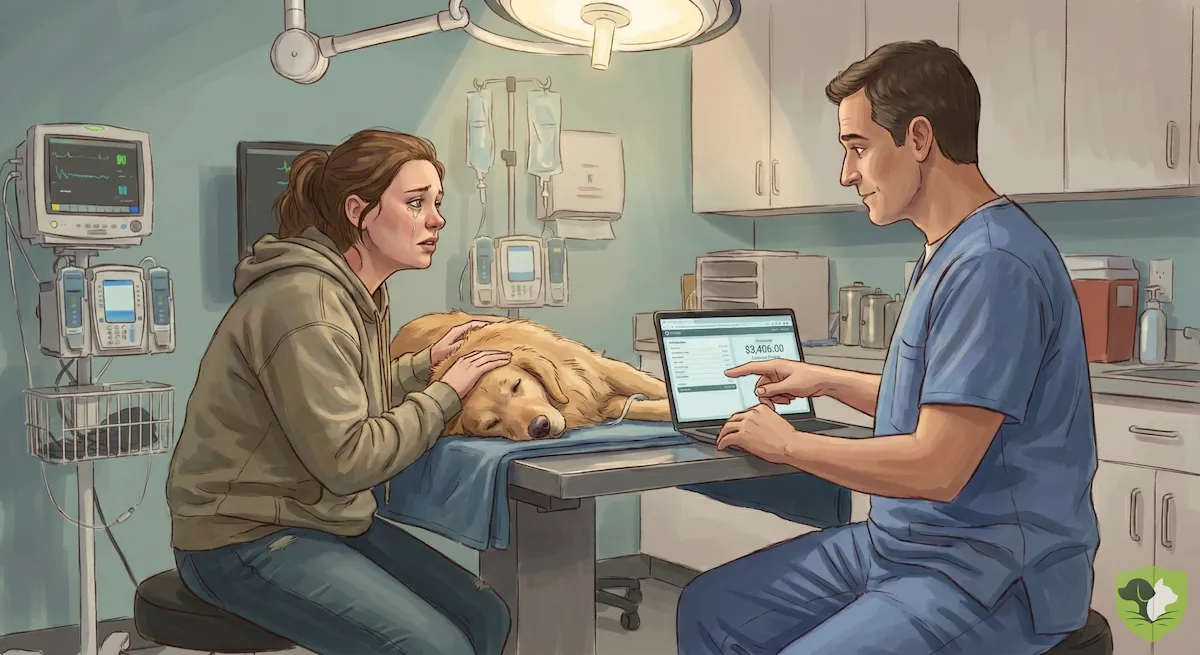
You don’t really care about pet insurance. You care about not having to choose between your savings and your pet’s life at 2 a.m. at the emergency vet.
Most people only learn what pet insurance covers after they’re staring at a $3,000+ estimate. They assume, “It’s insurance, so it’ll cover most of this,” and then run headfirst into exclusions, waiting periods, and pre-existing condition rules.
If your dog or cat is family, you deserve straight answers. This guide breaks down what’s covered, what’s not, how pet insurance pre-existing conditions work, and how to avoid the most painful surprises.
Table of Contents
- Quick Answer – What Pet Insurance Usually Covers (and Doesn’t)
- How Pet Insurance Coverage Works (Without the Jargon)
- What Pet Insurance Covers: The Medical Stuff That Actually Matters
- What Pet Insurance Doesn’t Cover: The Fine Print That Bites
- Pet Insurance Pre-Existing Conditions, Curable vs Incurable, and Bilateral Rules
- Accident-Only vs Accident & Illness vs Wellness: Picking the Right Mix
- Expert Insights: How Policies Are Structured (and Where People Get Burned)
- Scenario Snapshots – How Coverage Plays Out in Real Life
- Key Takeaways – What Pet Insurance Covers (and Doesn’t)
- Final Thought
- Frequently Asked Questions (FAQs)
Quick Answer – What Pet Insurance Usually Covers (and Doesn’t)
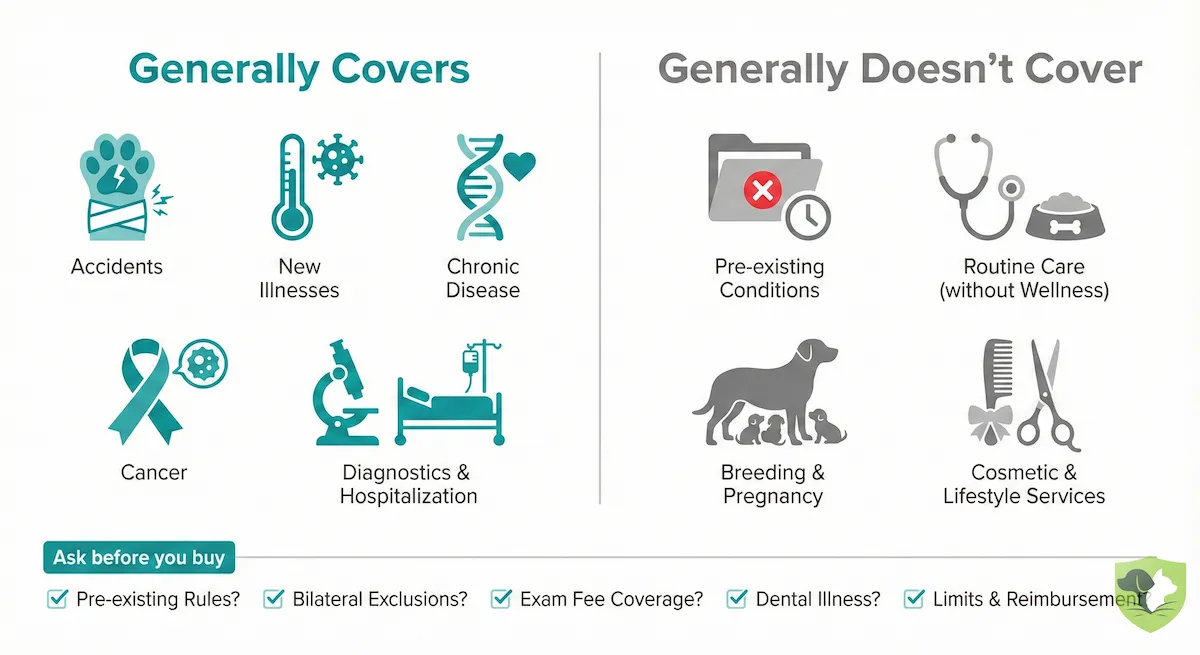
What Pet Insurance Typically Covers
Most accident & illness plans focus on the big, unexpected stuff:
- Accidents: Broken bones, swallowed toys or foreign objects, bite wounds, cuts, burns, and poison or toxin ingestion.
- Illnesses: Ear and eye infections, vomiting, diarrhea, pancreatitis, skin allergies and hot spots, urinary tract infections, diabetes, kidney disease, heart disease, cancer, and other serious diseases.
- Diagnostics & Treatment: Bloodwork, urinalysis, X-rays, ultrasound, advanced imaging (MRI/CT), surgery, hospitalization, prescription meds, and follow-up visits for covered conditions.
In simple terms: sudden accidents + new illnesses + the testing and treatment around them.
What Pet Insurance Usually Doesn’t Cover
Most plans do not cover:
- Pre-existing conditions (anything with signs or symptoms before coverage starts).
- Routine and preventive care (exams, vaccines, flea/tick meds) unless you add wellness.
- Breeding, pregnancy, and whelping.
- Cosmetic or elective procedures (ear cropping, declawing, tail docking).
- Grooming, boarding, training, pet-sitting.
- Most dental cleanings and many dental diseases.
- Experimental or non-standard treatments.
- Many admin line items and some end-of-life costs.
We’ll unpack these in more detail, but this is the snapshot.
How Pet Insurance Coverage Works (Without the Jargon)
Before worrying about brands and quotes, it helps to know what kind of product you’re actually buying. Pet insurance is basically “you pay the vet, the insurer pays you back.”
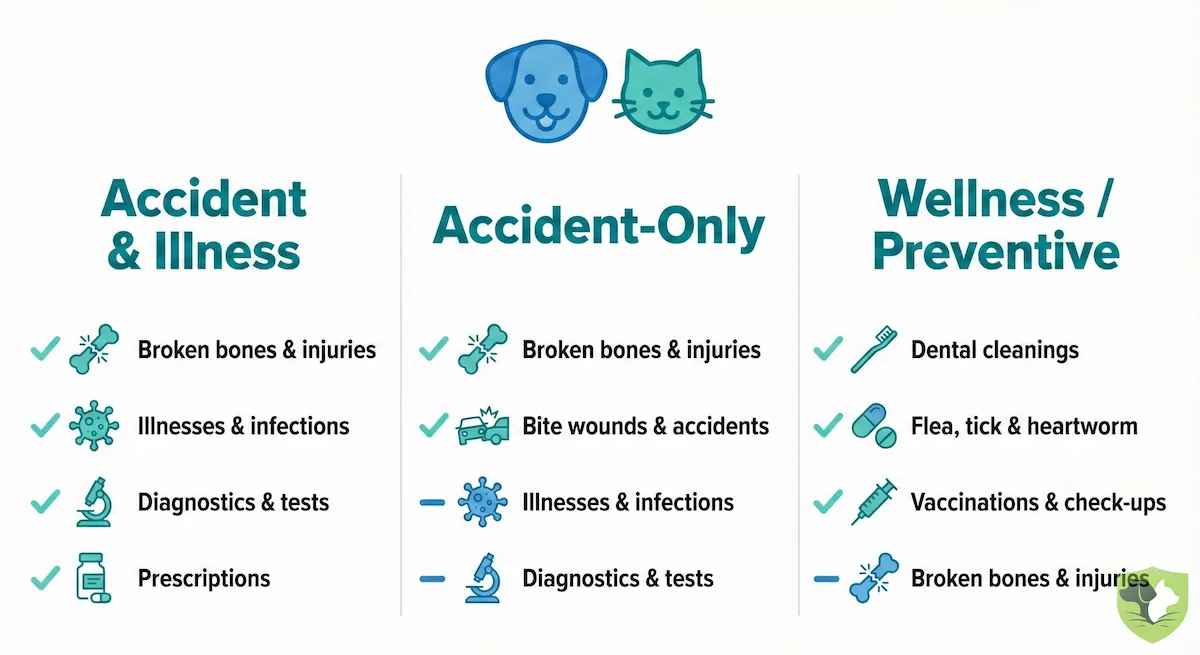
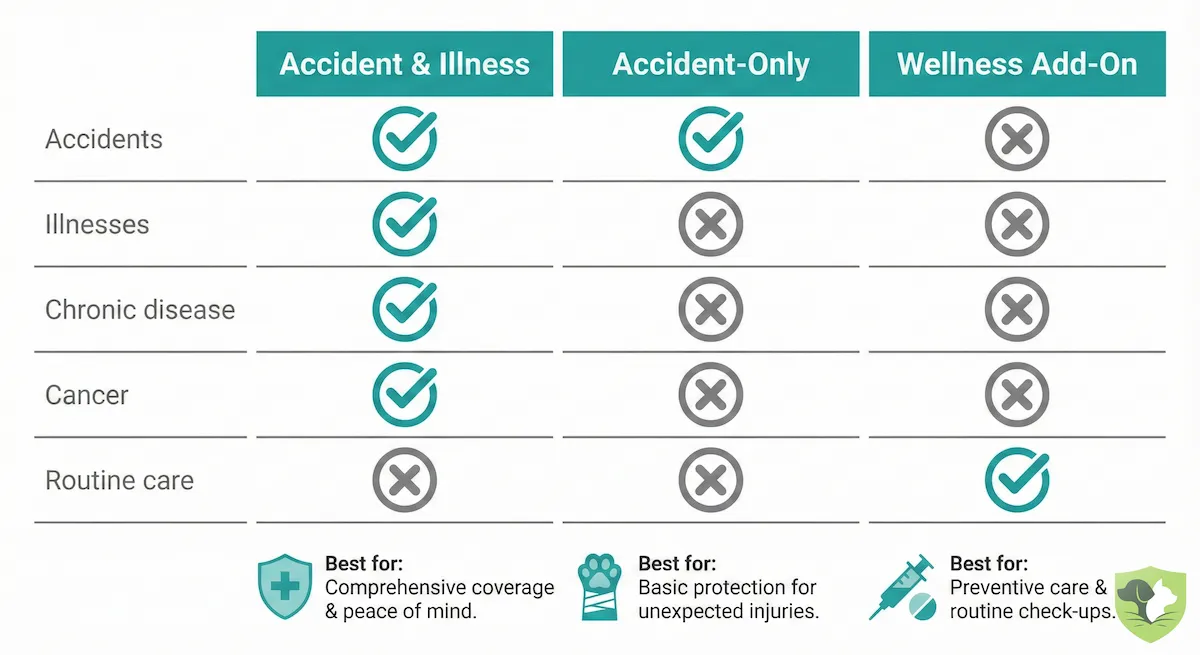
The Three Main Types of Pet Insurance
1. Accident & Illness (Most Common)
This is what most people mean when they say “pet insurance.” It usually covers:
- Accidents (injuries, swallowed objects, toxins)
- Illnesses (infections, chronic disease, cancer)
- Diagnostics and treatments (tests, surgery, meds, hospital stays)
If you want protection from both ER disasters and serious illnesses, this is the lane.
2. Accident-Only
Cheaper, but much narrower. Generally covers broken bones, wounds, trauma, swallowed objects, and poisoning.
It does not cover infections, allergies, arthritis, diabetes, kidney disease, cancer, or any illness at all. Useful for some senior pets or very tight budgets, but very limited.
3. Wellness / Preventive Plans
Not true “insurance.” More like a subscription for routine care. Often helps pay for annual exams, vaccines, flea/tick/heartworm prevention, basic screening tests, and sometimes spay/neuter or routine dental cleaning.
Wellness is a budgeting tool. Accident & illness is risk protection.
How Reimbursement Works
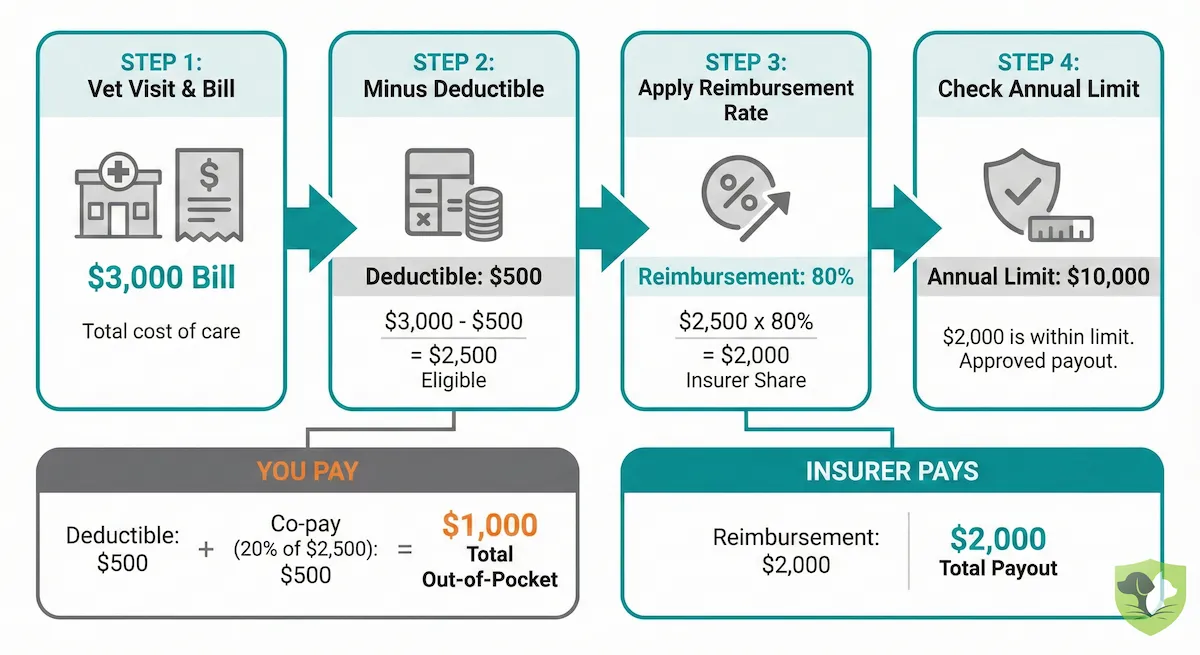
With almost all pet insurance, you go to the vet and pay the bill, then submit a claim (usually via app or website). The insurer reimburses you based on your plan.
Three numbers decide how much you really get back:
- Deductible: The amount you pay before insurance starts paying. Often annual (e.g., $250, $500) or per-condition.
- Reimbursement rate: The percentage the insurer covers after the deductible. Common options: 70%, 80%, 90%.
- Annual (or lifetime) limit: The most the insurer will pay in a policy year (or over your pet’s lifetime). e.g., $5,000, $10,000, or unlimited.
Get those three settings right, and the policy will behave the way you expect when a big bill hits.
What Pet Insurance Covers: The Medical Stuff That Actually Matters
Now let’s get specific about what pet insurance covers when your dog or cat needs real help.
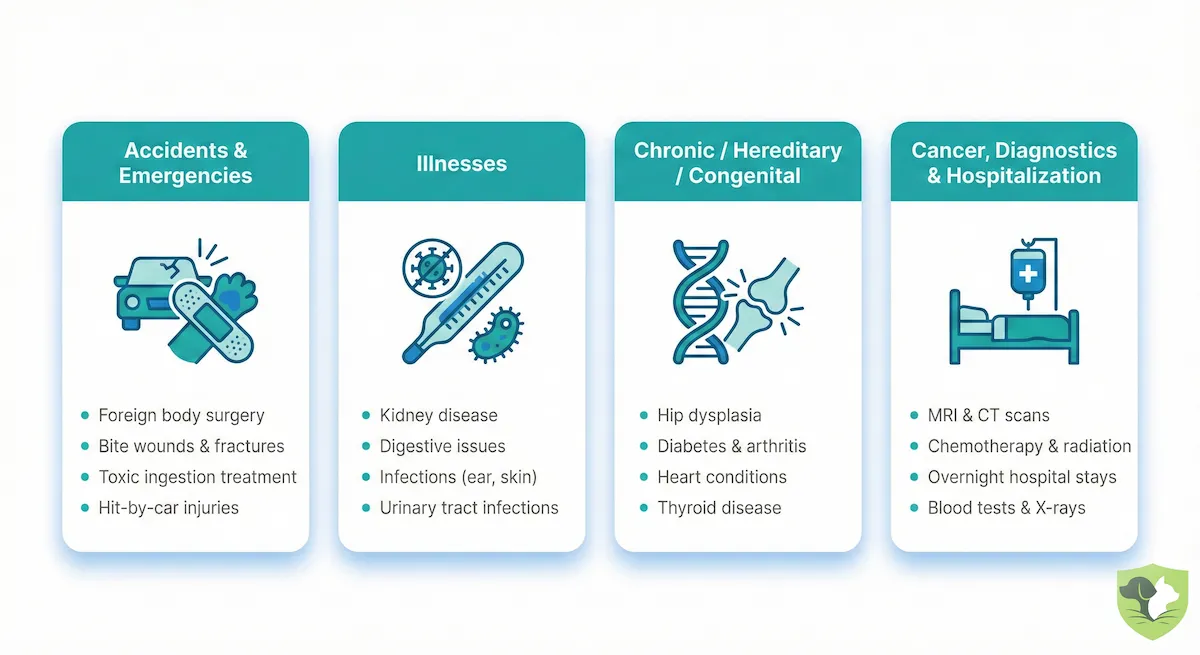
Accidents and Emergencies
This is where pet insurance often saves people from draining savings or maxing out cards.
Common covered accidents: Hit by a car, broken or fractured bones, bite wounds and deep cuts, foreign body ingestion (toys, socks, bones, string), poison or toxin ingestion (chocolate, meds, toxic plants), and burns or other serious trauma.
Typical covered costs around those: ER exam and emergency fees, X-rays, ultrasound, and other imaging, surgery and anesthesia, hospitalization and IV fluids, pain meds and follow-up care.
If it’s sudden, accidental, and serious, it usually fits the bill.
Illnesses: From “Off” to “Oh No”
Illness is where costs quietly keep coming. Most accident & illness plans cover:
- Ear and eye infections
- GI issues: vomiting, diarrhea, pancreatitis
- Skin allergies and hot spots
- Respiratory infections
- Urinary tract and bladder problems
As pets age, this often expands into kidney and liver disease, heart disease, thyroid issues, seizure disorders, and autoimmune disease.
If the problem wasn’t there before you bought the policy and you’re past waiting periods, it’s usually part of your pet insurance coverage.
Chronic, Hereditary, and Congenital Conditions
For many breeds, this section is the big one. Good accident & illness plans often cover:
- Chronic issues: allergies, arthritis, diabetes
- Hereditary conditions: hip dysplasia, heart disease, luxating patellas
- Congenital issues: problems present from birth but diagnosed later
Note: Catches to watch: Symptoms can’t appear before you bought the plan (otherwise, they’re pre-existing). Some companies require you to enroll pets young to fully cover hereditary risks. If you have a Frenchie, Golden, German Shepherd, doodle, or other high-risk breed, read this part of the policy twice.
Cancer Treatment
Cancer is one of the biggest financial shocks in pet care. Most accident & illness policies cover diagnostics (bloodwork, imaging, biopsies), tumor removal surgery, chemotherapy, and sometimes radiation or advanced therapies.
Cancer treatment can easily reach thousands per year. A decent reimbursement rate and a solid annual limit (or unlimited) matter a lot here.
Diagnostics and Hospitalization
The “just to find out what’s going on” portion of the bill adds up fast.
Typically covered diagnostics: Blood and urine tests, X-rays and abdominal ultrasound, CT, MRI (depending on plan), cytology, aspirates, and biopsies.
Typically covered hospital care: Day hospitalization and overnight stays, IV fluids and medications, oxygen cages, intensive monitoring, and ICU care.
If the condition itself is covered, the testing and hospital care around it usually are too.
Behavioral and Mental Health (Sometimes)
Some plans now acknowledge that behavior is a health issue too. You may see coverage for veterinary behaviorist visits, behavior-related medications (e.g., anti-anxiety), and treatment for diagnosed issues like separation anxiety or compulsive licking.
But: Basic obedience or puppy classes are not covered. Some companies exclude behavior entirely or limit it to higher-tier plans.
Alternative and Rehab Therapies
If your vet prescribes them for a covered condition, some plans include physical rehab, hydrotherapy, acupuncture, laser therapy, and chiropractic care.
These may be included, covered only up to a certain amount, or available as an optional add-on. Look for a section labeled “rehab,” “complementary,” or “alternative therapies.”
Dental: Accidents vs Disease
Dental is its own headache in pet insurance. Most plans are much more generous with dental accidents, like broken teeth from trauma, jaw fractures, and emergency extractions after an accident.
Where things get restrictive is dental disease. Routine cleanings are almost never covered. Periodontal disease may be covered only if you meet specific dental-care requirements. Complex dental surgery can be limited or excluded. If you have a small dog or a cat prone to dental trouble, this part of the policy is non-negotiable.
What Pet Insurance Doesn’t Cover: The Fine Print That Bites
Now the other side of the coin: what pet insurance doesn’t cover. This is where unpleasant surprises live.
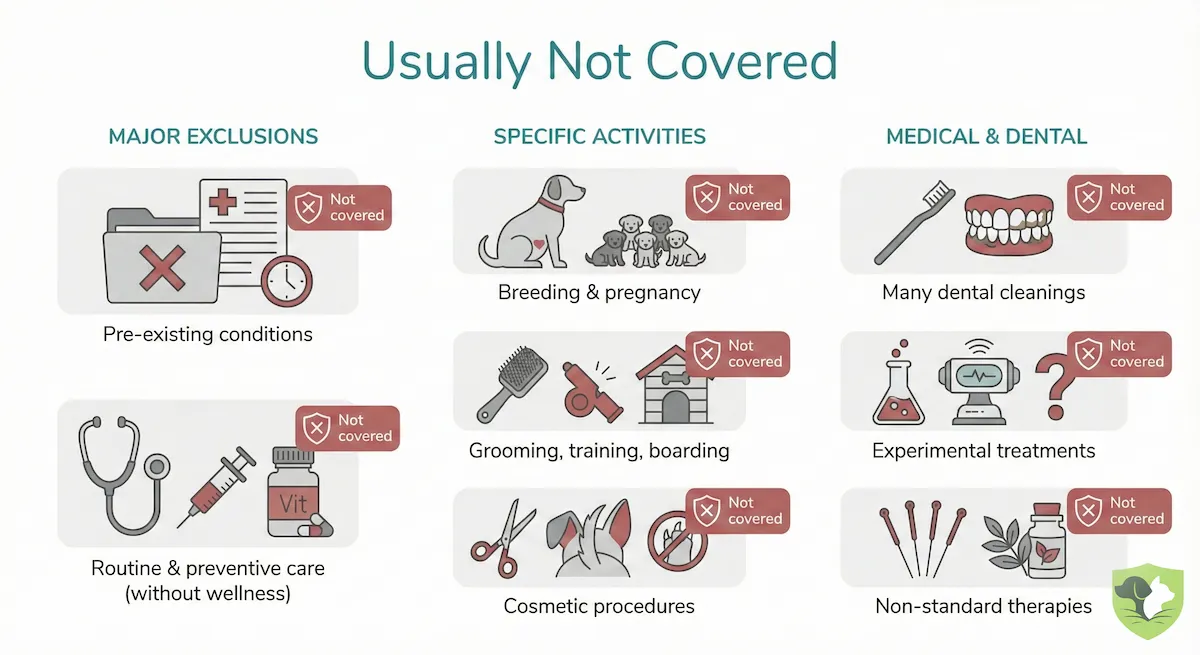
Pre-Existing Conditions
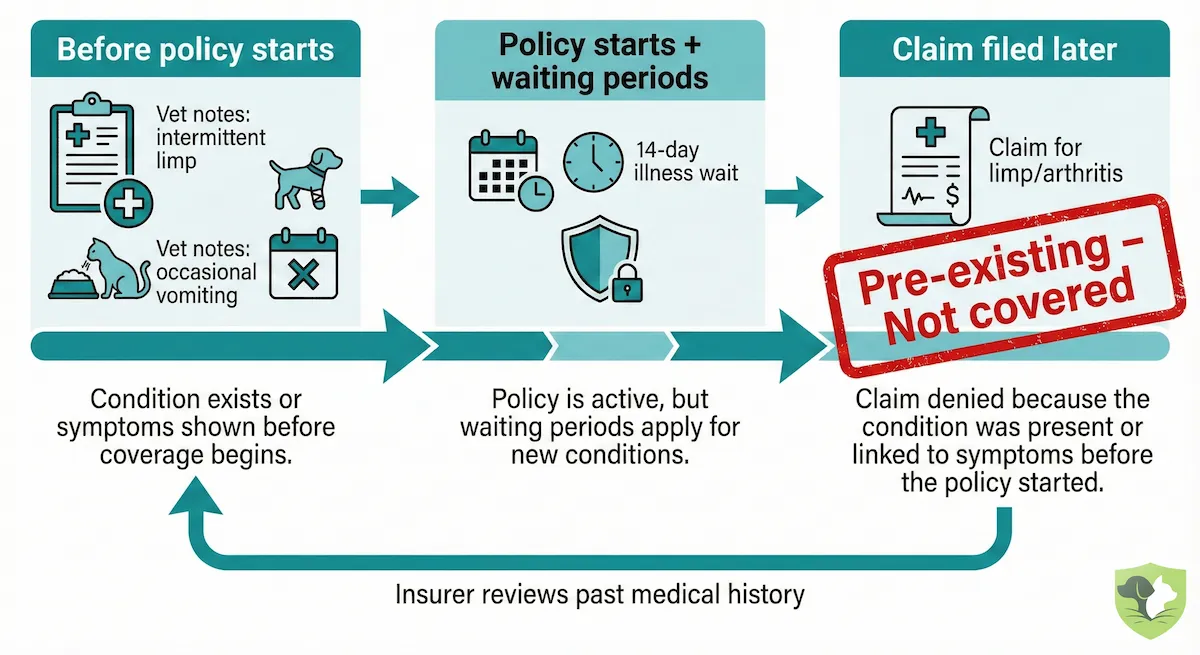
This is the big one. A pre-existing condition is anything with signs or symptoms before your policy started or during the waiting period—even if no one had a name for it yet.
That could include: Intermittent limping noted six months ago, “Occasional vomiting” visits, “Mild heart murmur, monitoring”, or long-standing allergies or chronic ear infections.
Insurers dig through medical records. If they can connect today’s problem to past notes, they may call it pre-existing and deny related claims. Pet insurance pre-existing conditions are almost never covered. Enrolling early is your best defense.
Routine and Preventive Care (Without Wellness)
Standard accident & illness policies usually do not cover: Annual check-ups, vaccines, flea/tick/heartworm prevention, routine screening labs and fecal tests, nail trims, anal gland expressions, and microchips.
To get help with this, you either add a wellness plan or budget and pay for routine care yourself. If a plan doesn’t clearly list routine care as covered, assume it’s not.
Pregnancy, Breeding, and Elective Procedures
Most pet insurance isn’t designed for breeding programs. Commonly excluded: Fertility testing and artificial insemination, pregnancy monitoring, whelping and planned C-sections, and complications directly tied to breeding.
Also excluded in most policies: Ear cropping, tail docking, declawing, and cosmetic dewclaw removal. If it’s for looks or convenience rather than medical necessity, don’t expect coverage.
Grooming, Training, and Lifestyle Services
Insurers cover medical problems, not lifestyle. Usually not covered: Grooming and baths, haircuts/de-shedding/nail trims, daycare and boarding, dog walking or pet taxis, and basic training and obedience classes. If it feels like a “Rover, trainer, or groomer” service, it’s generally on you.
Dental Cleanings and Many Dental Diseases
Dental is one of the most misunderstood areas. Most plans don’t cover routine cleanings and tie dental disease coverage to proof of regular dental care.
Frequently excluded unless you have a specific add-on: Cleanings and polishing, tartar removal, and routine “dental maintenance.” Dental disease coverage varies by insurer. Dental accidents are more likely to be covered than years of neglected teeth.
Experimental, Holistic, and “Nice-to-Have” Treatments
You’ll often see exclusions around anything considered experimental, investigational, or not standard of care.
That might include clinical trial treatments. Certain alternative therapies are not recognized as standard. General wellness supplements are not tied to a diagnosis. Holistic care (like acupuncture or chiropractic) might be covered, but only if prescribed by a vet, for a covered condition, and clearly listed in the policy.
Hidden or Overlooked Exclusions
Small, easy-to-miss exclusions:
- Exam fees and admin charges: Some plans cover diagnostics and treatment, but not exam or waste-disposal fees.
- Prescription foods: Often excluded, or only covered short-term with caps.
- End-of-life costs: Euthanasia may be covered. Cremation, burial, and memorial items are often excluded or minimally covered.
- Bilateral conditions: If one knee, hip, or eye was affected pre-enrollment, the other side can be excluded too.
Individually, these are small. Together, they define the true edges of your coverage.
Pet Insurance Pre-Existing Conditions, Curable vs Incurable, and Bilateral Rules
Let’s zoom in on the thing that causes the most frustration: pre-existing conditions.
How Insurers Decide Something Is “Pre-Existing”
They don’t just look at today. They look back through your pet’s records. A condition is usually called pre-existing if symptoms showed up before your policy started, or symptoms showed up during waiting periods.
Even without a formal diagnosis, repeated patterns count. That “intermittent limp” or “keeps vomiting, likely dietary” can be enough to link later joint surgery or GI disease back to the past. If it’s in your pet’s record before coverage, it can be used to deny future related claims.
Curable vs Incurable Pre-Existing Conditions
Many insurers categorize issues as curable or incurable.
Curable: These can be resolved and stay gone (e.g., one-time ear infection, single UTI, mild respiratory infection, short GI upset that doesn’t recur). Some plans will exclude them at first, then cover them again after a symptom-free period (often 6–12 months).
Incurable: These tend to stick around or recur (e.g., allergies, arthritis, diabetes, kidney or liver disease, chronic GI disease like IBD, heart disease, epilepsy, cancer). If these start before your policy, they’re typically excluded for life.
Bilateral Exclusions: When One Side Affects the Other
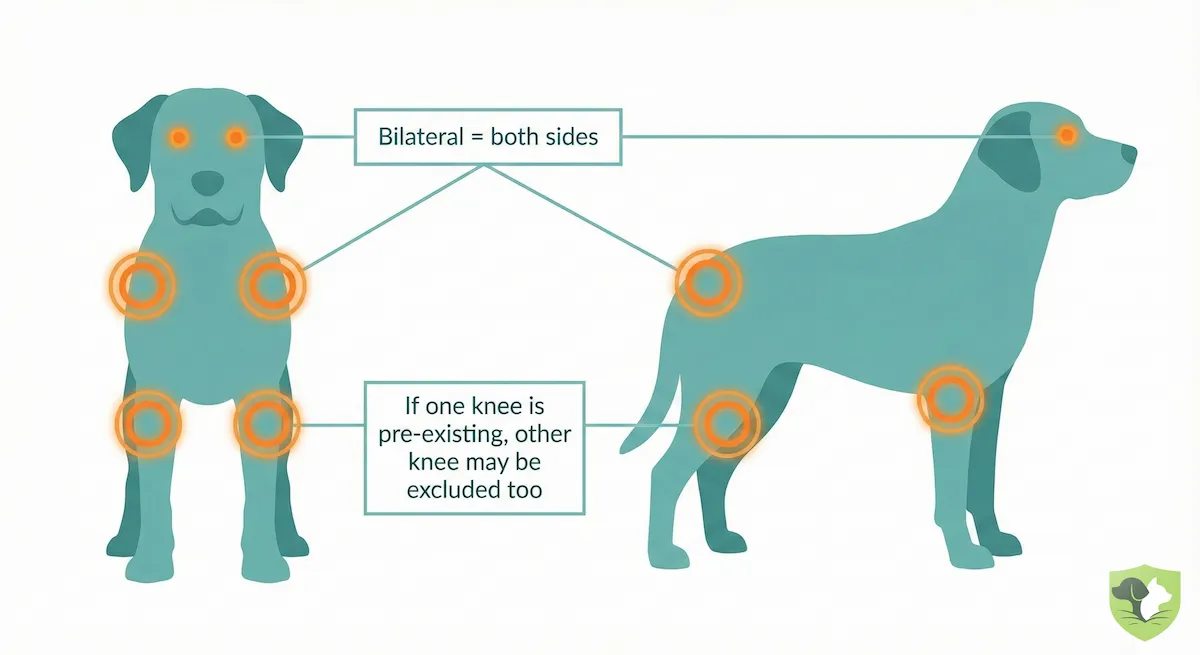
“Bilateral” = both sides of the body (left/right knees, hips, eyes, ears).
Many policies say: If a condition is pre-existing on one side, the same condition on the other side is also excluded.
Example: Left cruciate ligament ruptures pre-enrollment → noted as pre-existing. Right cruciate ruptures after enrollment. Policy treats cruciate disease as bilateral, so both knees are excluded. Same idea with hips, patellas, and some eye diseases. This matters a lot for breeds prone to orthopedic issues.
Switching Insurers and Losing Coverage
Switching can feel smart financially, but medically, it can be a reset.
When you move to a new insurer: Every past issue now counts as a pre-existing condition. Chronic problems that were covered under your old policy may be excluded under the new one. So even if a new company is cheaper or has a nicer app, switching can be a downgrade if your pet has an existing medical history.
Often, the best move is: Get a solid plan while your pet is healthy. Stick with it as long as it continues to treat your pet fairly.
Accident-Only vs Accident & Illness vs Wellness: Picking the Right Mix
You’ve seen what each type does. Let’s boil it down.
- Accident & illness is usually the best fit if your pet is young or middle-aged, your breed has known genetic risks, or you want help with both emergencies and serious diseases.
- Accident-only might make sense if your pet is older and can’t qualify for illness coverage, or your budget is tight, but you still want help with injuries.
- Wellness plans are worth considering if you like predictable monthly costs, you already plan to keep up with exams and vaccines, and you understand wellness is budgeting, not risk transfer.
Order of operations: Buy the strongest medical (accident & illness) coverage you can comfortably afford. Decide whether accident-only is an acceptable compromise if you truly can’t. Add wellness if it fits how you like to manage routine costs.
Expert Insights: How Policies Are Structured (and Where People Get Burned)
How Most U.S. Pet Parents Actually Use Insurance
In practice: Accident & illness is the dominant product. Accident-only is used by a smaller group (often senior pets or budget-constrained owners). Wellness is usually an add-on, not the main event.
The typical setup for many millennial pet parents: Accident & illness policy, optional wellness add-on, and a high enough annual limit to cover at least one major surgery or cancer case.
What Pricing Tells You About Real Risk
Look at average premiums, and you’ll see: Accident-only is cheap because injuries are less frequent and shorter in duration. Accidents & illnesses are more expensive because chronic diseases and cancer can cost thousands over the years.
Insurers' price for reality: Over a pet’s life, illness is far more expensive than a single broken leg. If you’re most worried about cancer, kidney disease, or diabetes, an accident-only policy won’t help you.
Waiting Periods and Orthopedic Rules
Waiting periods are where “I thought it was covered” turns into “they denied everything.”
Typical pattern:
Accidents: short wait (often a couple of days).
Illnesses: longer wait (about 14–30 days).
Orthopedic issues: sometimes 6–12 months, especially cruciate and hip problems.
Some companies offer an orthopedic exam/waiver path to shorten that—but only if you follow their process exactly and your pet passes. For large breeds or active dogs, enrolling early and understanding these rules is huge.
The Most Common “I Didn’t Know” Moments
From a pattern perspective, pet parents are most often surprised by: Conditions labeled pre-existing because of old notes, Dental coverage not being provided as expected, Exam fees not being reimbursed, and Bilateral exclusions excluding both knees or both hips.
If you focus your questions on those four areas, you’ll be ahead of most people buying pet insurance.
Scenario Snapshots – How Coverage Plays Out in Real Life
Scenario 1: Puppy Swallows a Toy
The Situation: An 8-month-old Lab mix swallows a rubber toy. This requires ER visits, imaging, surgery, and two nights in the hospital.
- Total Bill: $4,000.
- With Insurance: (Assuming $250 deductible, 80% reimbursement, $10k annual limit). $4,000 - $250 = $3,750. Insurer pays 80% of $3,750 = $3,000. You pay $1,000.
- Without Insurance: You pay $4,000.
Verdict: Same emergency. Very different financial impact.
Scenario 2: Cat Develops Diabetes
The Situation: A 7-year-old indoor cat is diagnosed with diabetes. Diagnosis and first month of care cost ~$1,500–$2,500. Ongoing yearly care: ~$800–$1,500.
- Accident & Illness Plan (Enrolled Young): ($250 deductible, 80% reimbursement). Year one: $2,000 costs → you pay ~$600 total. Future years: $1,200 costs → you pay ~$240 per year.
- Accident-Only Plan: Diabetes is an illness, so it is not covered.
- Enrolled After Symptoms: Treated as pre-existing, so it is often not covered.
Verdict: Same disease. Timing and plan type decide everything.
Key Takeaways – What Pet Insurance Covers (and Doesn’t)
What Pet Insurance Generally Covers
Most accident & illness plans cover: Accidents (injuries, swallowed objects, toxins), Illnesses (from simple infections to major chronic diseases and cancer), and Diagnostics and treatments (tests, surgery, hospital care, meds, follow-up).
In plain language: When something unexpected and medical happens, this is where pet insurance is meant to show up.
What Pet Insurance Generally Doesn’t Cover
Most plans don’t cover: Pre-existing conditions, Routine care (unless you add wellness), Breeding/pregnancy/elective procedures, Lifestyle services like grooming/daycare/training, Most dental cleanings and some dental diseases, Experimental or non-standard treatments, and Some prescription diets, supplements, and end-of-life costs.
How to Use This When You Shop
When you’re comparing plans, ask:
- Exactly what does pet insurance cover in this plan?
- How do you define and handle pre-existing conditions?
- Do you have bilateral or orthopedic exclusions?
- Are exam fees and dental illness covered?
- What are my deductible, reimbursement rate, and annual limit—and what does that look like on a $3,000 bill?
If the answers feel fuzzy, keep asking—or pick a different company.
Final Thought
Pet insurance won’t make vet care free. But the right policy can make sure that when your dog or cat really needs help, money isn’t the main reason you say “no.”
Understand what pet insurance covers, respect what it doesn’t, and choose a plan that matches your pet’s real risks and your budget—not just the cheapest number on a comparison table.
Frequently Asked Questions (FAQs)
What does pet insurance typically cover?
Most accident & illness plans cover sudden accidents (broken bones, swallowed objects), new illnesses (infections, cancer, diabetes), and the diagnostics and treatments required for them.
Does pet insurance cover routine care?
Standard policies do not cover exams, vaccines, or flea prevention unless you purchase a specific 'Wellness' add-on.
What is a pre-existing condition?
A pre-existing condition is anything with signs or symptoms before your policy started or during the waiting period—even if no formal diagnosis was made yet.
Are dental cleanings covered?
Routine cleanings are almost never covered. However, dental accidents (broken teeth) and some dental diseases may be covered depending on the policy.
What are bilateral exclusions?
This rule states that if a condition (like a knee injury) existed on one side of the body before coverage, the insurer may exclude coverage for the same condition on the other side.
WhiskerCover is reader-supported. When you click on links to pet insurance partners on our site and purchase a policy, we may earn a commission at no extra cost to you. Learn more about how we make money.